So, I have a crazy story about fermenting that I think goes to confirming a working theory of mine on gut health.
After I was glutened this last February, I couldn’t eat anything for about a week and some change. I slowly came back to eating, and had to re-get my dairy back by drinking milk kefir. However, try as I might, I just couldn’t handle store-bought hot sauce. I tried tiny spoonful every day, but no luck.
On the working theory that this would act the same as dairy, I fermented some jalapeno peppers for 3 weeks and made a hot sauce. Sure enough, I tried a spoonful – everything seemed ok! The next day, two spoonfuls – ok! The fourth day, I decided to really push the envelope, and used about 1 cup measurement of hot sauce: NO FALLOUT.
Not only was there no fallout, but I can now eat store-bought hot sauce with impunity.
The generic recipe for (lacto) fermentation is salt, water, starter, and whatever’s being fermented. Note that you don’t necessarily add an acid; that’ll be generated by the fermentation.
The ratio of salt to water AND vegetable (combined – but be sure to subtract the glass container’s weight) is 2-4%. Apparently, closer to 2% will be best for softer vegetables; closer to 4% will be best for hard vegetables.
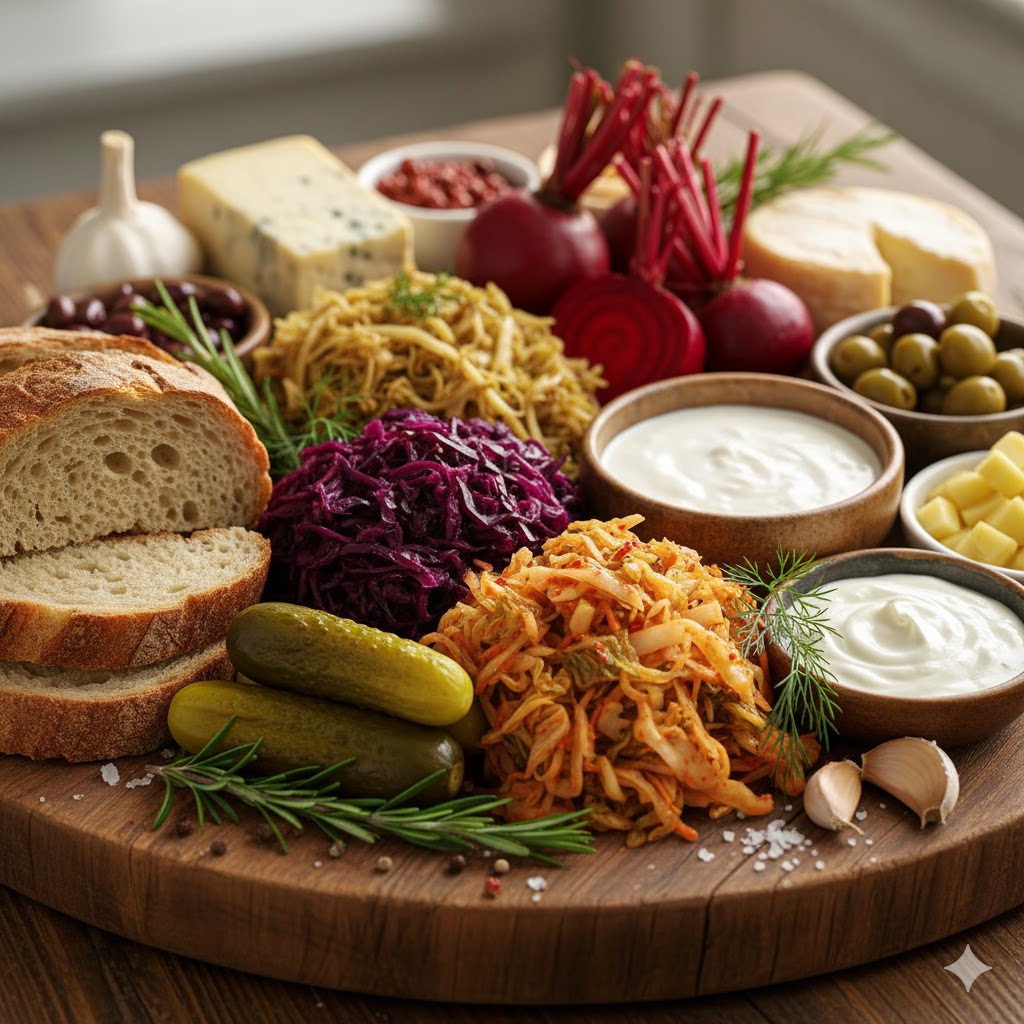
- Sauerkraut
- Hot sauce
- Garlic sauce
- L-Rueteri “yogurt”
- Milk Kefir
- (Unfiltered/un-“racked”) Wine
- (Unfiltered/un-“racked”) Beer
- Mead (especially simple mead – only raw honey + water, nothing else)
- Yogurt
- Cranberries
- Onions
Note that there are other kinds of fermentation than lacto-fermentation. My personal favorite here is black bean Natto – I’m a huge fan. It’s quite gross smelling, but it really grows on you fast – pun fully intended. Lacto fermentation is way easier, but obviously the payload is different with other types of fermentation.